Local plausibility, global madness
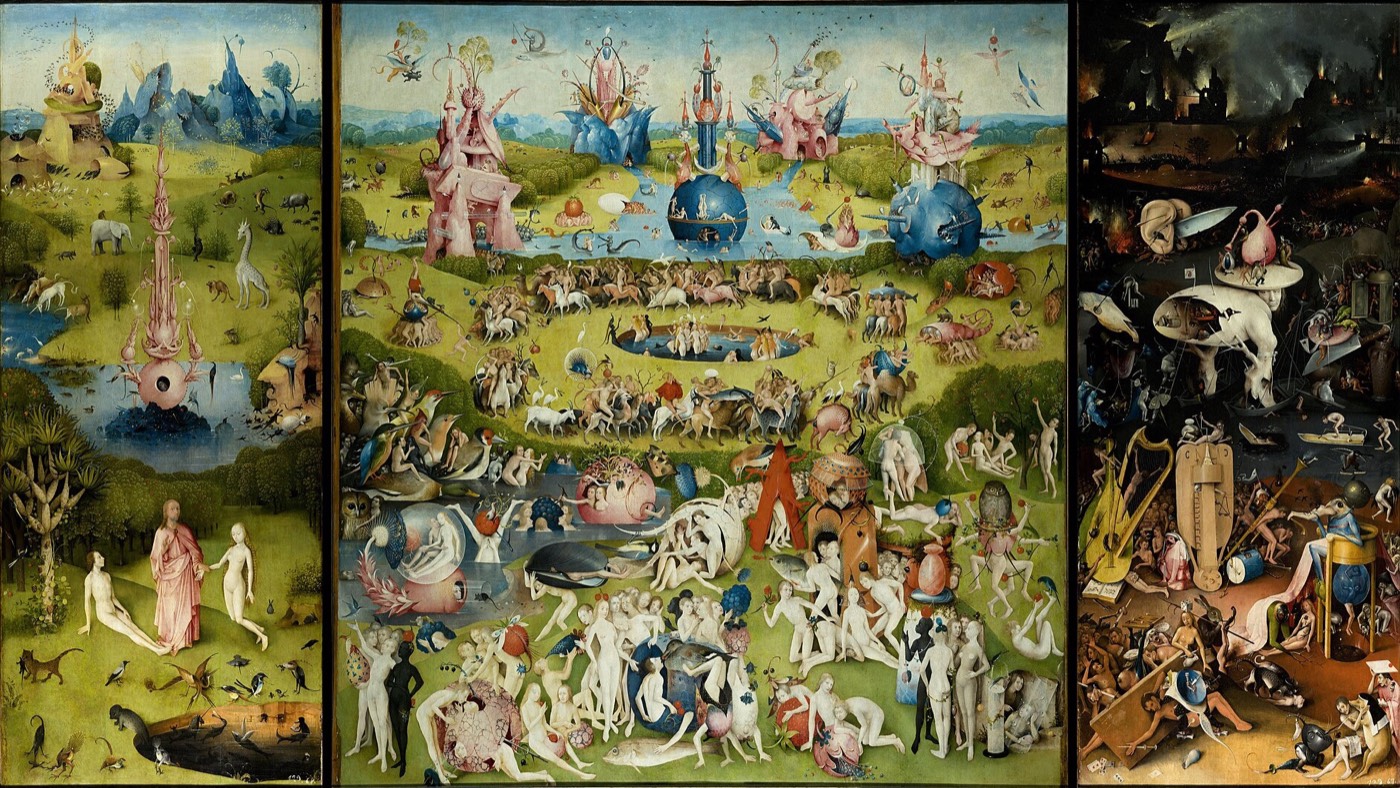
AI is phenomenal at writing lines of code, but terrible at choosing patterns or architecture, and it often skips design altogether. Left unattended, the result is local plausibility masking global madness.
Local plausibility first. In Stack Overflow’s 2025 survey, the top frustration with AI tools, cited by 66% of 31,000 developers, was solutions that are “almost right, but not quite.” Every line reads fine. The trouble is what the lines add up to.
Plausible code also feels fast. In METR’s 2025 trial, experienced developers took 19% longer with AI but believed it had sped them up by 20%. Its 2026 update says developers are likely more sped up now, but its data is only very weak evidence for how much. The gap between felt and real is the point.
Now the patterns. Ox Security reviewed 300 open-source projects, 50 of them written in whole or in part by AI, and named the anti-patterns of AI-written code. Among those it found in 80 to 90% of that code were “by-the-book fixation,” meaning textbook patterns instead of ones fit to the application, and “avoidance of refactors.”
Refactoring is disappearing. GitClear’s analysis of 623 million changes found that moved code, the signature of refactoring, fell from 21% of changed lines in 2022 to 3.8% so far in 2026. Duplicated blocks are up 81% since 2023. Codebases now grow by accretion.
And design. DesBench tested seven LLMs on 30 Java projects. They “struggle to produce correct implementations when provided with only high-level or no designs,” and have trouble defining operations and the relationships between classes.
Iteration makes it worse. SlopCodeBench had 15 agents extend their own code across 196 checkpoints. Structural erosion rose in 77% of runs and verbosity in 75.5%. Agent code was twice as eroded as 473 human repositories.
The finding that matters most: telling the agents to write quality code cut initial erosion by up to a third, but did not change the rate of degradation. A prompt is not a design. The decay happens every iteration, so the correction has to as well.
It holds at the scale of an organization. DORA’s 2025 report, from about 5,000 professionals, calls AI an amplifier of an organization’s existing strengths and weaknesses. AI adoption now improves delivery throughput, but it “still increases delivery instability.”
It hollows out the engineer, too. In Anthropic’s 2026 trial, developers learning a new library with AI scored 50% on a comprehension quiz, against 67% for those coding by hand. Those who had AI debug for them scored lowest. Those who used it for conceptual questions scored 65%.
Peter Naur, 1985: programming is the programmers building a theory of the matters at hand, not the production of a program and other texts. A program dies, he wrote, when the team that holds its theory is dissolved. Vibe coding skips the theory. The agent starts every session without one.
So build the mental model before the first line: the domain, the invariants, the boundaries, the patterns you will use and the ones you won’t. Write it down. Before every iteration, update it, then hold the change to it. AI types. You keep the theory.
Or vibe feature requests and bug fixes into existence, one plausible diff at a time, and end up in the third panel.